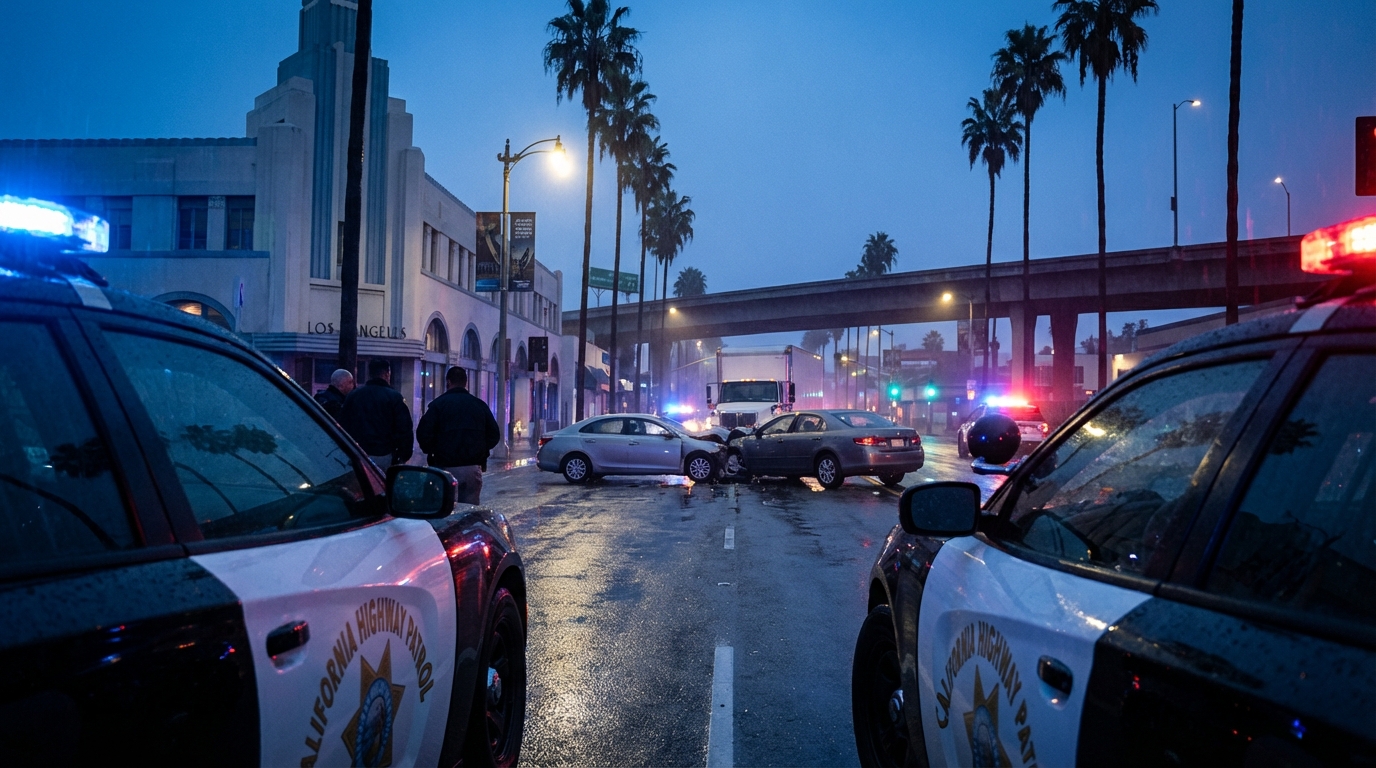
A serious crash can change our lives in seconds. One moment we're driving to work, picking up the kids, or heading home, and the next we're dealing with pain, fear, wrecked cars, and a flood of questions.
In San Diego, intersections are some of the biggest trouble spots on the road. Heavy traffic, quick signal changes, freeway access, tourism, delivery vehicles, and distracted driving all raise the risk. When crashes happen at intersections, they're often violent. Side-impact wrecks, left-turn collisions, pedestrian strikes, bike crashes, and multi-car pileups can leave people with life-changing injuries.
Some intersections feel risky the moment we approach them. Others seem ordinary until a driver runs a light or cuts across traffic. In this guide, we'll look at the kinds of intersections that tend to be most dangerous in San Diego, why these crashes happen, what signs we should watch for, and what steps can help after a serious wreck.
What makes an intersection dangerous in San Diego
A dangerous intersection usually has more than one problem. Traffic volume matters, but that's only part of it. Speed, visibility, timing, and confusion often combine to create a perfect storm.
In San Diego, many roads carry a mixed stream of drivers and riders. On the same stretch, we may see commuters, tourists, rideshare drivers, delivery vans, buses, motorcycles, cyclists, and people on foot. That mix raises the odds of mistakes. A driver rushing to beat a yellow light may not see a pedestrian stepping off the curb. A tourist may drift across lanes. A rideshare car may stop without warning near a corner.
Freeway ramps add another layer of danger. Intersections near I-5, I-8, I-15, and SR-163 often funnel in fast-moving traffic from one direction and stop-and-go traffic from another. Short yellow lights, blocked sight lines, awkward turn pockets, and heavy left-turn demand make things worse.
San Diego's role as a busy port and border region also affects crash risk. Commercial traffic moves through major corridors every day, so some intersections see more trucks and large vehicles than drivers expect. That matters because bigger vehicles take more room, need more time to stop, and can cause far more damage on impact.
The crash types we see most often at busy intersections
At crowded intersections, certain wrecks happen again and again. T-bone crashes are among the worst because the side of a car offers less protection. Left-turn collisions are also common, especially when drivers misjudge speed or try to beat oncoming traffic.
Rear-end crashes happen in backed-up turn lanes and at lights that change fast. We also see chain-reaction wrecks when one impact pushes cars into the next. In urban areas, drivers may hit pedestrians in crosswalks or strike cyclists and motorcyclists who are harder to spot.
These crashes often lead to serious harm, not just bent metal. Common injuries include broken bones, head trauma, internal bleeding, back injuries, and spinal damage.
At intersections, a split-second mistake can become a long-term medical problem.
Why larger vehicles make intersection crashes worse
Large vehicles make a bad situation worse very quickly. Trucks, buses, and commercial vans need more distance to stop, wider space to turn, and more time to clear an intersection.
That matters in San Diego, where commercial traffic is part of daily road life. A fully loaded truck can outweigh a passenger car many times over. So when a big vehicle hits a smaller one, the force is often devastating. Even a low-speed crash can leave the people in the smaller vehicle with major injuries.
Blind spots also play a role. If we drive next to a truck at an intersection, the driver may not see us when turning or changing lanes.
The San Diego intersections drivers should approach with extra caution
There isn't one official list that captures every high-risk spot in the city. Crash patterns shift over time, and conditions change with construction, growth, and traffic flow. Still, some types of intersections are well-known for heavy crash exposure.
In practice, the most dangerous intersections in San Diego tend to share the same traits. They carry high traffic volume, force quick decisions, and mix cars with pedestrians, bikes, scooters, buses, and trucks. They also leave little margin for error. That's why the places below deserve extra caution, even when the light is green and traffic seems normal.