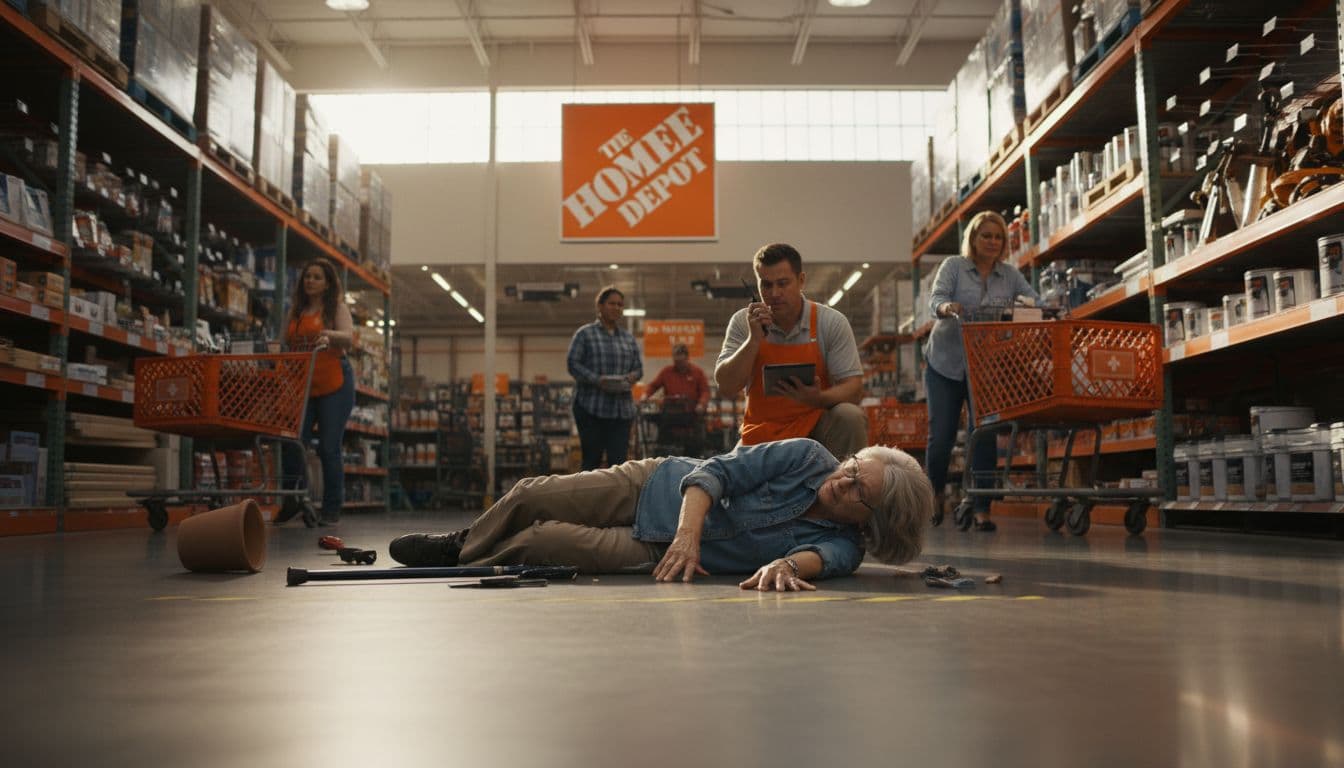
You did not plan on waking up in pain, juggling doctor visits, medical bills, and calls from an insurance adjuster who sounds friendly but leaves you uneasy.
If you slipped and fell in a San Diego store, apartment complex, parking lot, or office building, your life may feel like it flipped overnight. On top of the physical pain, there is the fear of missing work and the worry of how to pay for treatment.
At the heart of your case is one key idea: liability. That simply means who is legally responsible for what happened. In a slip and fall claim, proving liability is how you get your medical bills, lost wages, and pain and suffering covered instead of paying for someone else’s carelessness.
This guide will walk you through how liability works in California slip and fall cases, what you need to prove, what evidence helps, and how an experienced San Diego slip and fall attorney like Ronald B. Laba builds a strong claim so you can focus on healing instead of fighting with insurance companies.
What Does “Liability” Mean In A Slip And Fall Claim?
Liability is the legal way of saying, “Who has to pay for the harm?”
In a slip and fall case, the question is not just, “Did you fall?” It is, “Did a property owner or business fail to keep the place reasonably safe, and did that failure cause your fall?”
Under California personal injury law, most slip and fall cases are based on negligence. If you can show that a person or business was negligent, and that their negligence led to your injuries, they can be held liable for the damage you suffered.
An experienced lawyer takes these rules and turns them into a clear story for the adjuster, judge, or jury: what should have happened, what went wrong, and how that hurt you.
If you want a broader overview of how these cases fit into personal injury law, the firm’s San Diego Personal Injury Attorney page is a helpful starting point.
Negligence Explained In Simple Terms
Negligence means failing to use reasonable care and causing harm to someone else.
Think about these everyday examples:
A grocery store knows the aisles get slick when it rains but does not put out floor mats or warning signs near the entrance.
An apartment complex lets a stairway light stay burned out for weeks, even though tenants complained.
A business leaves a broken step or torn carpet in a main hallway because fixing it costs money.
In each situation, a careful owner would have fixed the hazard or at least warned people. When they do not, and someone gets hurt, that lack of reasonable care is negligence.
Slip and fall cases often come down to showing what the property owner should have done to keep people safe and how their failure led to your fall.
Duty Of Care: Who Owed You Safety On The Property?
Most businesses and property owners have a duty of care to keep their property reasonably safe for visitors. This usually includes:
Shoppers in a store
Tenants in an apartment building
Guests in a hotel
Workers or visitors in an office or warehouse
What is “reasonable” depends on the place. A busy supermarket should check floors often for spills. A small office might not need the same level of inspection, but still must address obvious hazards.
One of the first things a San Diego slip and fall lawyer does is figure out who owned or controlled the property and what safety duties they had under the circumstances.
Key Elements You Must Prove To Win A Slip And Fall Case
Slip and fall cases can feel complicated when you are hurting, but the legal building blocks are clear.
To prove liability, you generally need to show:
There was a dangerous condition on the property.