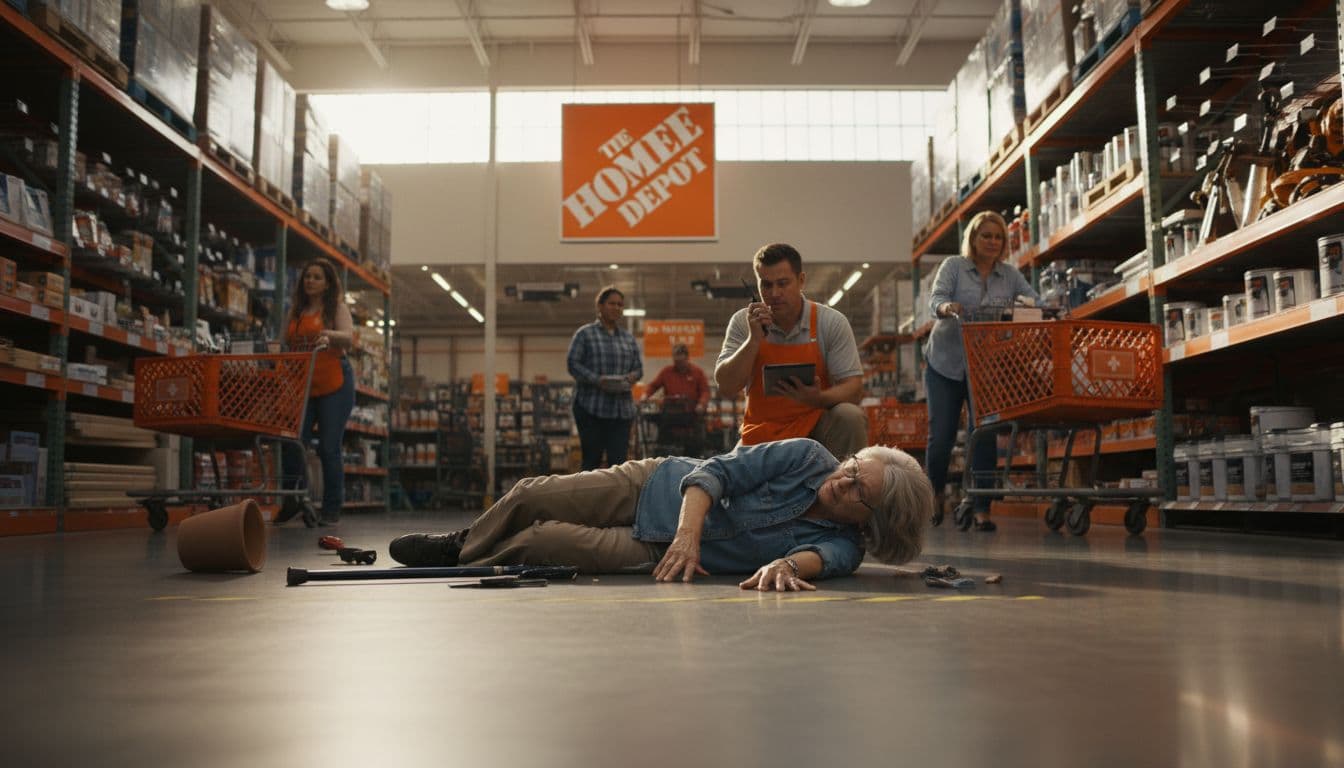
A slip and fall can feel like a bad moment you should be able to shake off. But when your back locks up, your wrist breaks, or you hit your head, the fallout can take over your life fast. Suddenly you’re juggling pain, appointments, time off work, and bills that don’t wait.
Most San Diego slip and fall injury claims come down to one core issue: premises liability. In plain terms, that means showing the property owner or business let a preventable danger exist, and that danger caused your injury.
Timing matters more than people expect. A spill gets mopped, a loose mat gets tossed, and security video can be recorded over in days, sometimes sooner. If you’re seriously hurt, it also helps to know you don’t have to be the point person with insurance. A lawyer can take over calls and paperwork so you can focus on healing.
Premises liability in plain English, what you must prove in a slip and fall
Premises liability is about carelessness on property. Not every fall is someone else’s fault, and insurance companies lean on that idea. The difference between “unlucky” and “compensable” is usually whether the danger was preventable and whether the owner acted reasonably.
In a typical California-style slip and fall claim, you’re trying to prove a few building blocks:
Duty of care: The owner or business had a responsibility to keep the property reasonably safe for visitors.
Unsafe condition: Something about the property created a real risk (not just a harmless imperfection).
Notice: The owner knew about the hazard or should’ve known about it with reasonable checks.
Failure to fix or warn: They didn’t correct the issue in time, or didn’t warn people in a clear way.
Causation: The hazard actually caused the fall, and the fall caused your injuries.
Think of it like a chain. If one link breaks (for example, there’s no proof the hazard existed long enough for anyone to notice), the claim gets harder.
Dangerous conditions that often lead to real claims
Slip and fall hazards show up in everyday places, especially where foot traffic is heavy and maintenance gets rushed. Common examples in San Diego include:
Wet floors with no warning sign, including freshly mopped tile in a store entryway. Leaky refrigeration units in grocery aisles that create recurring puddles. Uneven sidewalks, crumbling curbs, or broken steps outside restaurants and shopping centers. Poor lighting in parking lots or stairwells where you can’t see a change in elevation. Loose rugs, bunched mats, and torn carpeting that catch a toe like a hidden hook. Cluttered aisles where product boxes block a normal walking path. Construction site hazards on or near public walkways, such as missing barriers or ignored safety steps.
The key question is simple: would a reasonable owner have fixed it, blocked it off, or warned people before someone got hurt?
If you want a deeper look at how these cases are handled, this page on a San Diego slip and fall attorney breaks down common causes and what a strong claim often includes.
Notice, the missing puzzle piece insurance companies attack
“Notice” is often where insurers push back hardest. They may admit you fell, but argue the business had no fair chance to prevent it.
There are two main types:
Actual notice means someone knew. An employee saw the spill, a manager got a complaint, or a worker caused the hazard and walked away anyway.
Constructive notice means they should’ve known. Maybe the puddle was dirty and had track marks, suggesting it sat there awhile. Maybe the store has a history of the same leak. Maybe the inspection routine was sloppy, skipped, or not documented.
Expect defenses like: “It happened seconds before you slipped,” “We inspect regularly,” or “No one reported it.” Proof can come from maintenance logs, cleaning schedules, employee statements, prior incident history, and video that shows how long the hazard was present.