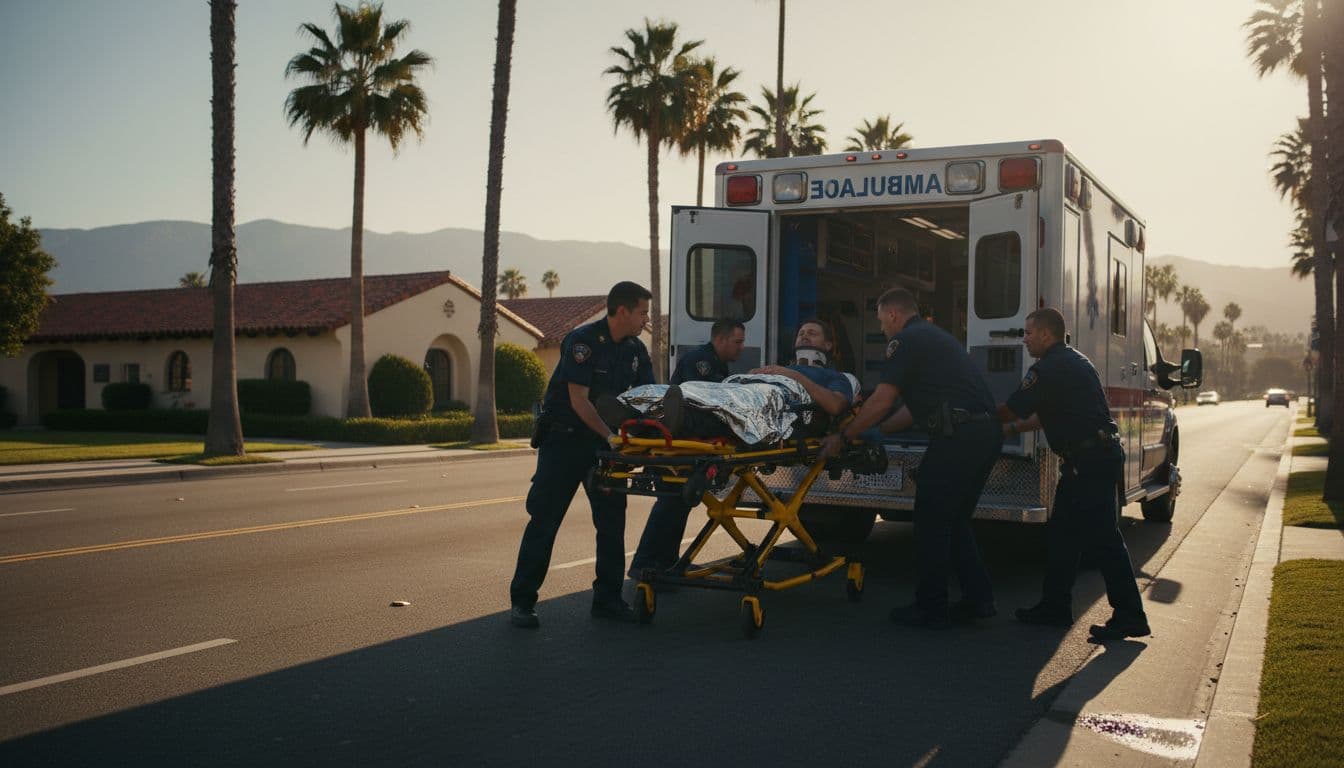
While a California injury case is pending, medical bills are usually handled through your own health insurance, medical payments coverage on your auto policy, or a treatment lien in which a provider agrees to wait for payment out of the settlement. Each choice affects how much money reaches you at the end.
My name is Ronald B. Laba. Since 1991 I have worked with injured people in San Diego County, and the question I hear before any question about settlement value is simpler and more urgent: who pays for the treatment I need right now? The at-fault driver's insurer does not pay bills as they come in. It pays once, at the end, in a lump sum. Everything in between has to be arranged.
Medical payments coverage on your auto policy
Medical payments coverage, often called MedPay, is optional first-party coverage on a California auto policy, commonly written between $1,000 and $10,000. It pays reasonable medical expenses from a crash regardless of fault, and it pays quickly. It is a useful bridge for the emergency room bill and the first weeks of care while liability is still being sorted out.
MedPay is typically subject to reimbursement from a later settlement, so it is not free money, but it keeps accounts out of collections during treatment.
Using your health insurance
Using health coverage is often the most economical path, because the insurer pays negotiated rates that are far below billed charges. The trade-off is a lien or reimbursement right. Under California law and, for federal plans, under ERISA, the health plan can claim repayment out of your recovery.
Medi-Cal and Medicare have their own statutory reimbursement rules, and Medi-Cal's recovery is capped by statute in ways private plans are not. These amounts are frequently negotiable, and reducing them is part of the work at the end of a case rather than an afterthought.
Treating on a lien
When someone has no health insurance and no MedPay, providers sometimes agree to treat on a lien, meaning they defer payment until the case resolves. It gives access to care that would otherwise be out of reach, especially for imaging, orthopedics and physical therapy.
Lien treatment has real drawbacks worth understanding before agreeing to it. Charges are usually at full billed rates rather than negotiated rates. If a case resolves for less than expected, the lien balance can consume a large share of the recovery. And defense attorneys routinely argue that lien-based billing inflates damages, which becomes an issue at deposition and trial.
Why the number on the bill is not the number the jury sees
In Howell v. Hamilton Meats & Provisions, Inc. (2011), the California Supreme Court held that an injured plaintiff may recover past medical damages only up to the amount actually paid or incurred, not the higher amount originally billed. A $60,000 billed charge that a health plan settled for $14,000 supports a claim for the paid amount.
Future medical care is valued differently and is typically established through treating physicians or a life care plan. This distinction between billed and paid is one of the main reasons two cases with identical injuries can be worth different amounts, a topic I cover in more depth in my guide to what determines case value.
Practical steps that protect the recovery
- Give every provider your health insurance information even if a claim is pending.
- Check your auto declarations page for MedPay before assuming you have none.
- Keep every explanation of benefits — those documents establish the paid amounts.
- Tell your attorney about every lien, including ones signed at a clinic intake desk.
- Do not let bills go to collections silently; notice to the provider that a claim is pending often pauses collection activity.
For related reading, see how to handle insurance adjusters, my auto accident practice page, and the San Diego car accident guide.
Frequently Asked Questions
Q: Should I use my health insurance if someone else caused the crash? A: In most cases yes. Health coverage pays negotiated rates and keeps care moving, and the plan's reimbursement claim is usually far smaller than full billed charges.
Q: Can a hospital place a lien on my injury settlement? A: Yes. California's Hospital Lien Act allows a hospital that provides emergency and ongoing care to assert a lien against a third-party recovery, subject to statutory limits and notice requirements.
Q: What if I have no insurance at all? A: Treatment on a lien may be an option, and MedPay may exist on a household auto policy. The important thing is not to skip care, because gaps in treatment are used to argue the injury was minor.
Q: Are medical liens negotiable at the end of a case? A: Frequently. Providers, health plans and public payors often accept reductions, particularly where the available insurance limits are less than the full value of the claim.
If you are facing medical bills after an injury in San Diego County, contact my office at (760) 940-6231 for a free consultation.
This is general information, not legal advice. Prior results do not guarantee a similar outcome.