San Diego slip and fall attorney Ronald B. Laba. Help proving a property owner knew about the hazard that caused your fall. Free consultation.
San Diego draws millions of residents and visitors every year to its beaches, shopping centers, and downtown attractions — and with that foot traffic comes a steady stream of slip and fall injuries. From a wet tile floor at a Mission Valley shopping center to a cracked sidewalk in the Gaslamp Quarter, property owners throughout San Diego County have a legal duty to keep their premises reasonably safe. When they fail to do so and someone gets hurt, California law allows the injured person to pursue compensation. The Law Offices of Ronald B. Laba, APC has spent more than 30 years representing injured San Diego County residents, recovering over $100 million for clients, and we handle slip and fall claims on a contingency-fee basis — meaning you pay nothing unless we win your case.
How Slip & Fall Injuries Happen Around San Diego
Slip and fall cases arise anywhere the public walks, and San Diego's mix of coastal, urban, and suburban environments creates a wide range of hazards. Common scenarios our firm sees include:
- Retail and shopping centers: Spilled liquids, freshly mopped floors without warning signs, or debris left in aisles at the busy retail corridors surrounding Mission Valley, where shopping centers and the crowds heading to and from Snapdragon Stadium create heavy foot traffic and rushed, distracted walking.
- Downtown San Diego sidewalks and parking structures: Uneven or broken pavement, potholes, and poorly lit stairwells in the dense pedestrian environment around the Gaslamp Quarter, Horton Plaza, and the Convention Center, where crowds from events and nightlife increase the odds of a fall going unnoticed until it's too late.
- Coastal and tourist destinations: Sand-covered walkways, wet boardwalks, and slick steps near Mission Beach, Pacific Beach, La Jolla Cove, and Balboa Park, where moisture, salt spray, and heavy pedestrian volume combine to create slip hazards that property owners and the City are obligated to address.
- Apartment complexes and private property: Poorly maintained stairways, broken handrails, inadequate lighting, and neglected common areas in the region's many multi-unit residential communities.
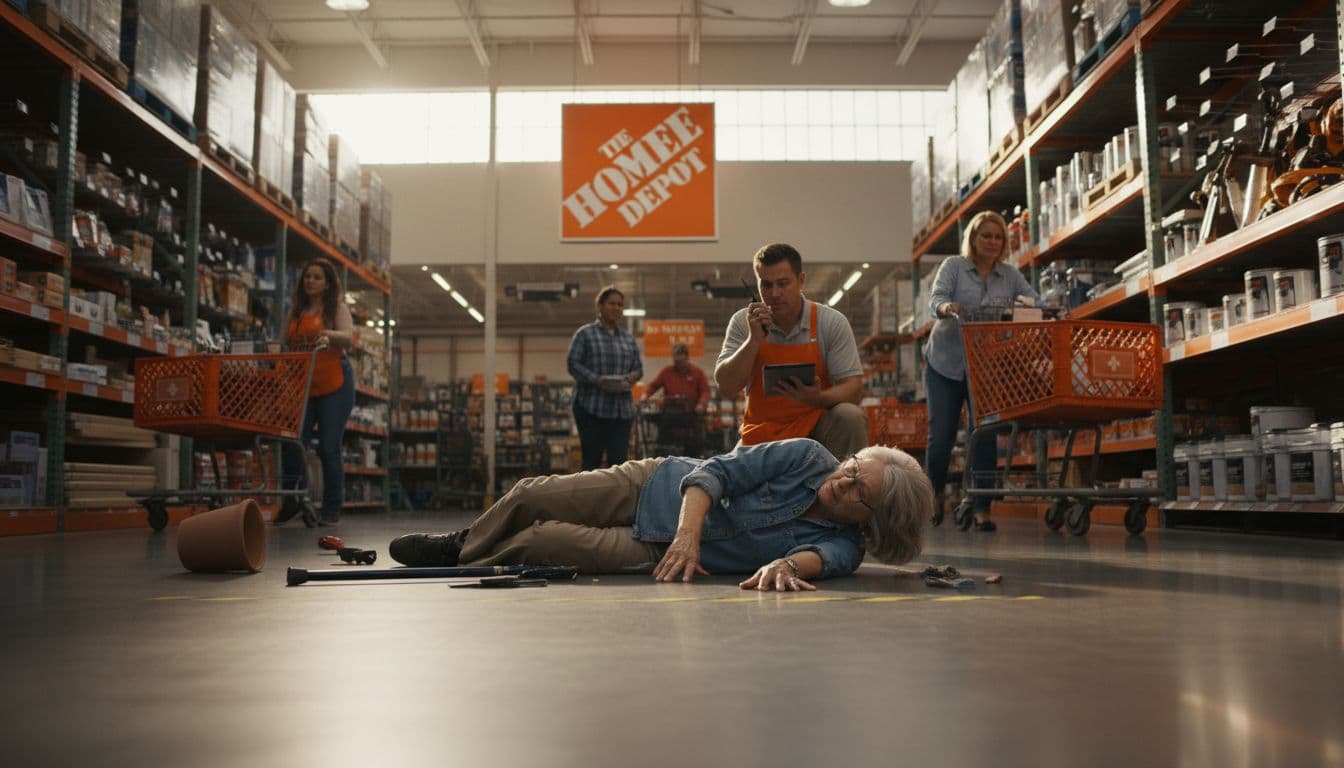
- Grocery stores, restaurants, and hotels: Failure to promptly clean up spills, missing warning cones, torn carpeting, or loose floor mats that catch a foot mid-stride.
Because I-5 and I-8 funnel enormous volumes of commuters and visitors into Mission Valley and Downtown daily, the businesses lining these corridors see constant customer traffic — and with that comes a heightened duty to inspect and maintain floors, walkways, parking lots, and stairwells.
Why Slip & Fall Claims Are More Complicated Than They Look
Many people assume a slip and fall case is simple: you fell, you got hurt, the property owner should pay. In practice, these are among the more contested categories of personal injury claims. Insurance companies and property owners routinely argue that the hazard was "open and obvious," that it hadn't existed long enough for staff to discover and correct it, or that the injured person wasn't paying attention. Establishing liability requires proving that the property owner or manager knew, or reasonably should have known, about the dangerous condition and failed to fix it or warn visitors within a reasonable time.
Evidence tends to disappear quickly — surveillance footage gets overwritten, wet floors get mopped up, and witnesses move on. That's why documenting the scene, obtaining incident reports, and preserving video before it's erased is critical in the days following a fall. Slip and fall injuries can also be deceptively serious: hip fractures, spinal injuries, traumatic brain injuries from a head strike, and torn ligaments are common, and older adults in particular face a much higher risk of long-term complications from a single fall. Insurance adjusters frequently use these medical and evidentiary complexities to minimize or deny otherwise valid claims, which is why having an experienced advocate reviewing the details matters.
Compensation Available in San Diego Slip & Fall Cases
Depending on the facts of your case, compensation may include:
- Emergency room, surgical, and ongoing medical treatment costs
- Physical therapy, rehabilitation, and future medical care
- Lost wages and diminished future earning capacity
- Pain, suffering, and loss of enjoyment of life
- Permanent impairment or disfigurement
- In fatal fall cases, wrongful death damages for surviving family members
We never promise a specific outcome or dollar figure — every case depends on its own facts, injuries, and available insurance coverage — but we work to fully account for both the immediate and long-term impact of your fall.
California Laws & Deadlines That Apply to Your Claim
California's personal injury statute of limitations generally gives you two years from the date of injury to file a lawsuit for a slip and fall (Cal. Code Civ. Proc. § 335.1). That window shrinks dramatically, however, if your fall happened on government-owned property — a sidewalk maintained by the City of San Diego, a public park, a transit station, or a government building. In those cases, you generally must file a formal claim with the public entity within just six months of the injury (Cal. Gov. Code § 911.2), making it essential to identify the property owner quickly.
California also follows a pure comparative negligence rule. If you were partly at fault for your fall — say, you were looking at your phone or ignored a posted warning — you can still recover compensation, but your award is reduced by your percentage of fault. Property owners and insurers frequently try to shift blame onto the injured person for exactly this reason, which makes a thorough investigation into the actual condition that caused the fall especially important.
Local Medical & Legal Resources
If you're injured in a fall anywhere in San Diego County, seeking prompt medical attention protects both your health and your claim. Depending on location and severity, injured San Diegans are often treated at UC San Diego Medical Center in Hillcrest, Scripps Mercy Hospital San Diego, Sharp Memorial Hospital, or, for injured children, Rady Children's Hospital. Keep copies of all discharge paperwork, imaging results, and treatment notes — this documentation becomes the backbone of your claim.
Lawsuits arising from San Diego slip and fall accidents are typically filed in San Diego Superior Court, Central Division, located at 1100 Union St, San Diego, CA 92101, with related criminal and civil matters sometimes handled at the Hall of Justice at 330 W Broadway. Our firm is well versed in the local court procedures and filing requirements that apply to cases venued downtown.
Steps to Take After a Fall in San Diego
- Seek medical care immediately, even if the injury seems minor at first.
- Report the fall to the property owner, manager, or landlord and request a written incident report.
- Photograph the hazard, the surrounding area, and your injuries before conditions change.
- Get contact information from any witnesses who saw the fall.
- Avoid giving a recorded statement to an insurance adjuster before speaking with an attorney.
- Preserve the shoes and clothing you were wearing, and keep all medical bills and records.
- Contact an experienced slip and fall attorney promptly, given the short deadlines for claims against government entities.
If you or a loved one was hurt in a slip and fall accident anywhere in San Diego — from a Downtown parking garage to a Mission Valley shopping center or a coastal boardwalk — the Law Offices of Ronald B. Laba, APC is available 24/7 to talk through what happened. We offer a free consultation, handle cases on a contingency-fee basis so you owe nothing unless we recover for you, and our bilingual team (Español) has represented San Diego County families for more than three decades. Call us today at (760) 940-6231.